

Jewish Voices for Voting Rights — From Selma to Justice Kagan to Us
A Black friend recently asked me, “Where are the Jewish voices speaking out against last week’s Supreme Court decision further dismantling the Voting Rights Act of 1965?”
It was a powerful question.
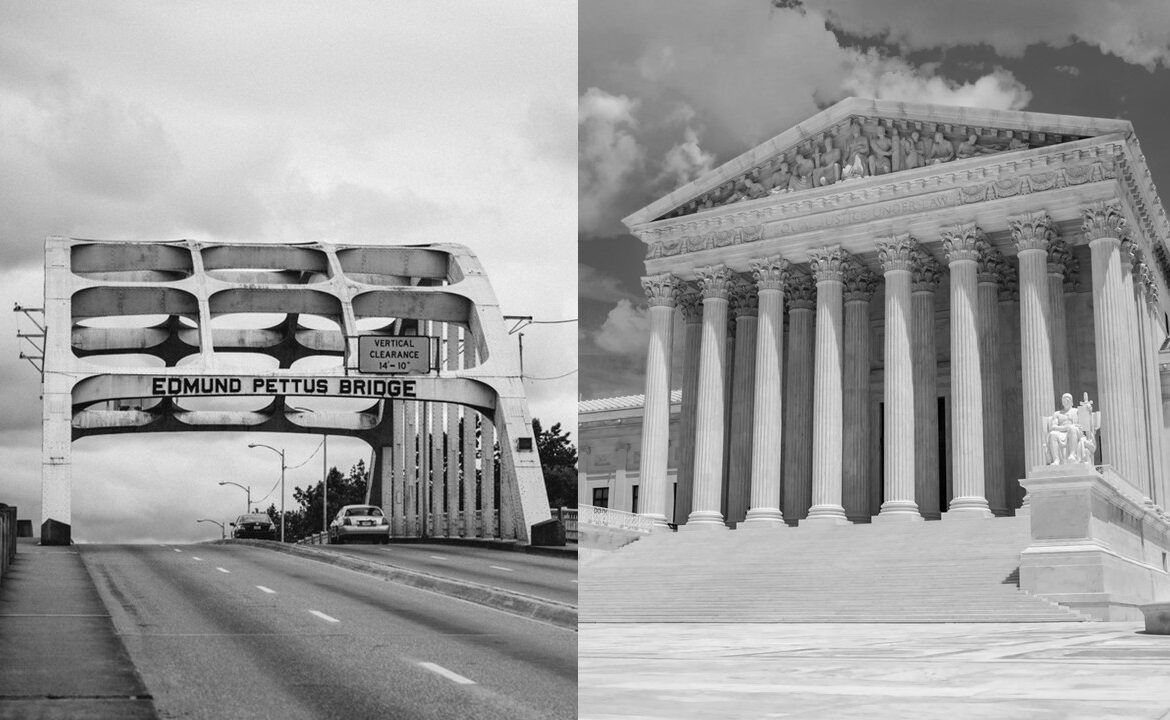
We celebrate the march from Selma to Montgomery and honor the legacy of Black and Jewish allies who stood together in the struggle for civil rights. But where are those voices today when longstanding protections for minority voting rights are being weakened?
The recent Supreme Court decision, which found the creation of a second majority-Black district to be an unconstitutional gerrymander, further erodes key provisions of the historic Voting Rights Act — landmark legislation born from the shared sacrifice and moral courage of Blacks and Jews marching together for justice.
So again, where were the Jewish voices?
I was deeply moved that one of the clearest and strongest voices of dissent came from a Jewish justice. Justice Elena Kagan issued a powerful dissent from the bench, joined by Justices Sonia Sotomayor and Ketanji Brown Jackson. In a rare and forceful act, Justice Kagan read her dissent aloud, warning that the decision “demolishes the foundational right Congress granted of racial equality in electoral opportunity.”
Three women — including two women of color and one Jewish woman — stood before the majority and declared that this decision was wrong and dangerous for American democracy.
Another voice that continues to inspire me is that of my friend and colleague, Reverend Dr. Benjamin F. Chavis Jr., with whom I am blessed to work closely. Dr. Chavis said:
“The Supreme Court decision has normalized racial discrimination in America with respect to voting. It is contradictory that it is in the guise of being ‘race neutral.’ We all know that we do not live in a race-neutral society. To codify racial inequity and injustice surrounding voting takes us back more than six decades.”
Just as Jewish voices stood alongside the Black community in the 1960s to help secure voting rights, it is notable that a Jewish justice again spoke with moral clarity — using this extraordinary moment to express profound concern about the implications of this decision for American democracy.
Now the question becomes not simply where the voices are, but whether more of us are willing to raise them.
May the Black community, the Jewish community, and all people of conscience follow the example of those who came before us –and of Justices Kagan, Sotomayor, and Jackson — by doing all in our power to resist the disenfranchisement of African American voters.
Protecting voting rights is central to the health of American democracy. We best honor the legacy of Black-Jewish collaboration not by merely remembering the allyship of the past, but by living it in the present.
The generation before us walked too far, sacrificed too much, and worked too hard for us to remain silent now.
No Comments